Can You Bring a Portable Charger on a Plane? Power Bank Rules Explained
- Sits under
- Travel
- Posted
- Read time, roughly
- 4 min
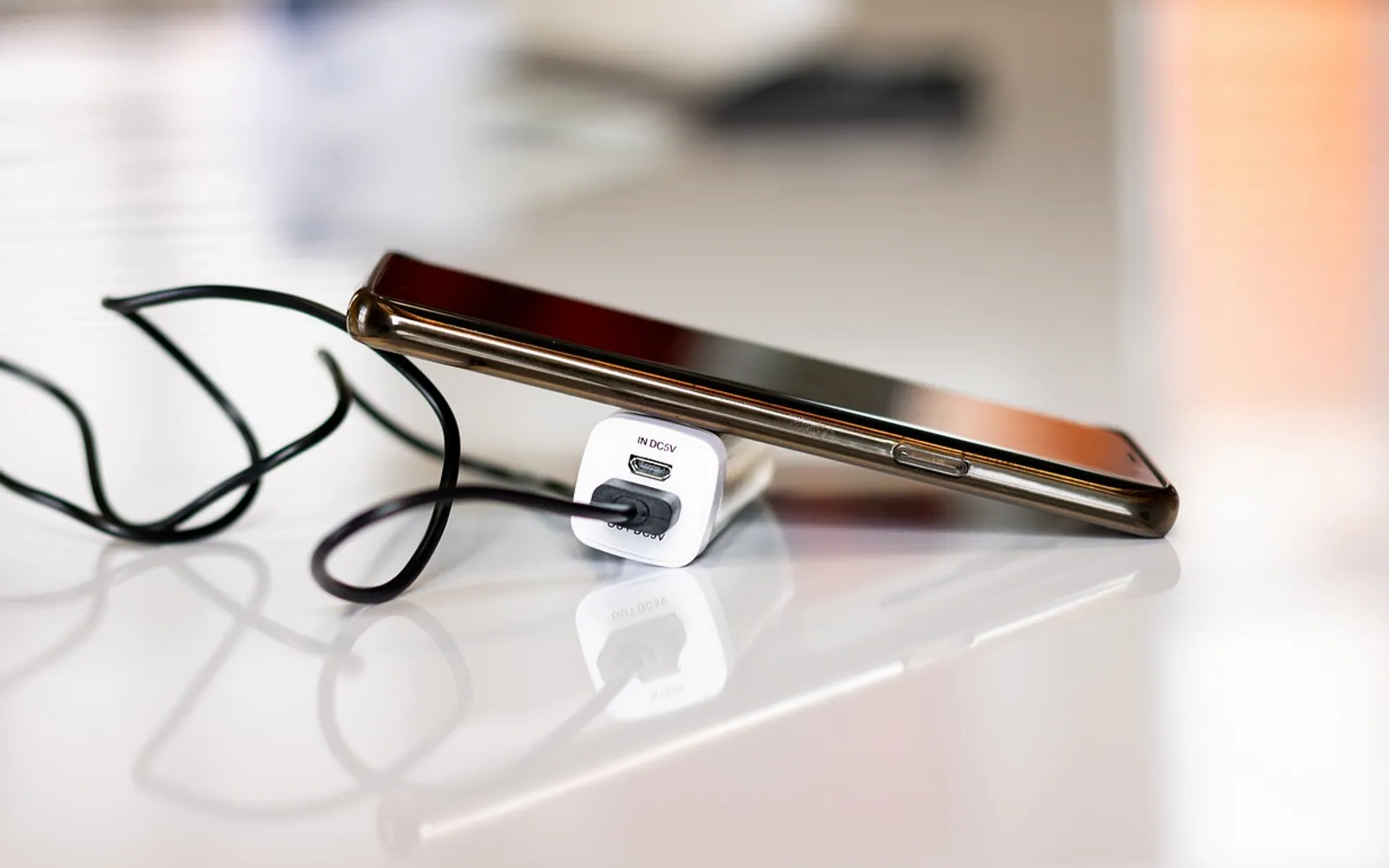
Yes, you can bring a portable charger on a plane, but it has to go in your carry-on bag or stay on you. Power banks contain lithium batteries, and spare lithium batteries are not allowed in checked luggage under the rules most aviation authorities follow. Size matters too: chargers up to 100 watt-hours (Wh) are generally allowed without special permission, those between 100 and 160 Wh usually need the airline's approval, and anything larger is normally not permitted in passenger baggage at all. Airlines can add their own stricter rules, so a quick check before flying is worth it.
Why the cabin, not the hold
Lithium batteries store a lot of energy in a small space. If one is damaged or faulty, it can overheat. In the cabin, crew can see and deal with that quickly; in a cargo hold, nobody would notice. That is the reason behind the carry-on rule, and why a power bank must be taken out of any bag that gets gate-checked at the last minute because the overhead bins are full.
Reading watt-hours from the label
Many power banks print their rating in watt-hours on the casing. If yours shows only milliamp-hours (mAh), you can work it out:
Wh = mAh × voltage ÷ 1,000
Use the battery's rated voltage, which is usually printed near the capacity and is commonly 3.6 or 3.7 volts for the cells inside, not the 5-volt USB output. A 20,000 mAh charger rated at 3.7 V works out at 74 Wh, comfortably under the common 100 Wh threshold.
| Label capacity (at 3.7 V) | Approximate watt-hours | Usual status in carry-on |
|---|---|---|
| 5,000 mAh | 18.5 Wh | Generally allowed |
| 10,000 mAh | 37 Wh | Generally allowed |
| 20,000 mAh | 74 Wh | Generally allowed |
| Between 100 and 160 Wh | Large laptop-style banks | Usually needs airline approval, often limited to two spares |
| Above 160 Wh | Portable power stations | Normally not allowed on passenger flights |
If a charger has no readable rating at all, security staff may refuse it, so an unmarked or worn label is a reason to leave it at home.
Rules on board
Being allowed to carry a power bank is not the same as being allowed to use it. A growing number of airlines restrict charging devices from a power bank during the flight, ask passengers to keep it within sight rather than in the overhead bin, or forbid recharging the power bank itself from the seat socket. These rules differ by airline and change over time, so read your airline's baggage or dangerous goods page shortly before departure and follow crew instructions on board.
A packing checklist
- Check the rating and make sure it is clearly printed.
- Pack it in your cabin bag, ideally in an outer pocket you can reach.
- Protect the ports from keys and coins; a pouch or the original case is enough.
- Count your spares if you carry more than one, especially larger ones.
- Charge it before you leave, because some airports ask travellers to power devices on.
- Leave damaged units at home. A swollen, cracked or unusually hot power bank should not fly at all.
Making the battery last the trip
A power bank is often a backup for a phone working harder than usual: maps, boarding passes, translation apps and roaming all drain the battery. Switching off mobile data when you do not need it, downloading maps and entertainment before leaving and keeping the screen dim stretch every charge. The guide on avoiding roaming charges abroad covers the data side, and many of the same habits help people on limited plans at home, as set out in the guide to making the most of a basic phone plan.
Once you are back, the trip's photos deserve better than sitting forgotten on a phone. Sending a selection to a digital photo frame keeps them in view for the people who were not on the trip.
Common questions
Can I put a power bank in checked luggage if it is switched off?
No. The restriction applies to spare lithium batteries regardless of whether they are switched off. Keep it in the cabin.
Is a phone charging case treated as a power bank?
Usually, yes, because it contains its own battery. Treat it the same way: carry-on only, with a readable rating.
What about laptops and cameras?
Batteries installed in devices follow separate rules that generally allow them in the cabin and, in some cases, in checked bags when fully switched off. Spare batteries for those devices follow the power bank rules.
Rules come from aviation authorities and individual airlines and can change. Always confirm with your airline before travelling.
Fresh in every section
Good places to start
 InsurancePet Insurance Waiting Periods: How They Work Before Cover Starts4 min
 GardeningWhy Are My Solar Lights Not Working? Simple Checks and Fixes4 min
 Real estateImpact of Singapore’s Real Estate Boom on Local Communities2 min
 Social MediaThe Cost of Ignoring SEO: What Montreal Businesses Risk Losing2 min
Questions? Write to us.
Suggestions help us plan.